Shoulder pain is the most common complaint I hear from yoga practitioners. It’s usually felt at the front of the shoulder, comes on slowly over months or years, and shows up most in Chaturanga, Downward Dog, and anything arms-overhead.
Most yoga blogs treat this with a list of “8 poses to heal your shoulders”. That’s fine, but it skips the actual question. Why are your shoulders getting injured in the first place?
This post is that answer. Once you understand why shoulders get injured in yoga, the fix becomes obvious, and it’s not a magic pose. It’s two things you’re probably not doing in your practice.
Shoulders Aren’t One Joint
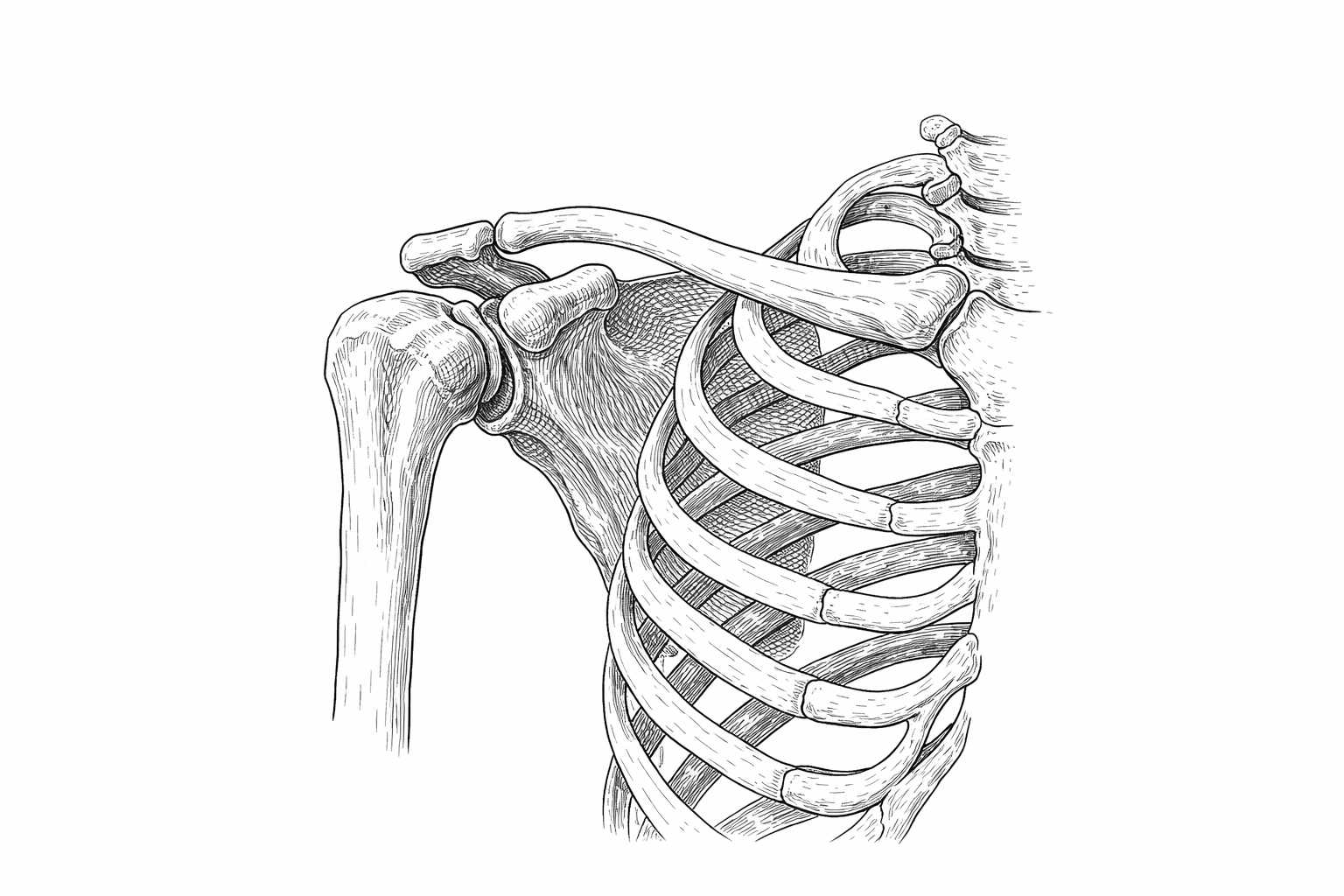
The first thing to understand is that what most people call “the shoulder” is actually four joints working together. This matters, because almost every yoga shoulder injury comes from these four joints not moving together.
To keep it simple, I group them into two categories:
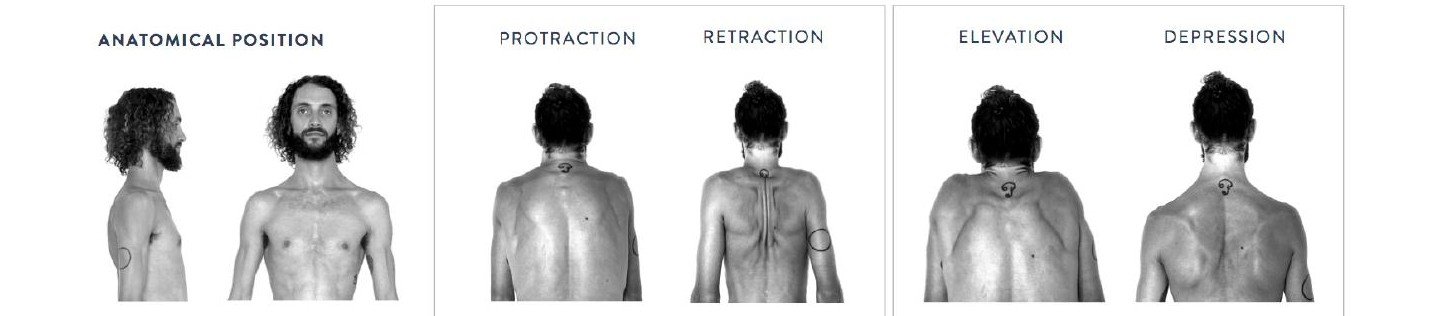
The shoulder girdle. Your shoulder blades (scapulae) and collarbones. These are the joints that move when you shrug, or draw your shoulders forward and back, without moving your arms.
The arm joint (the glenohumeral joint). This is where the ball of the arm bone sits in the socket of the shoulder blade. It’s the single most mobile ball-and-socket joint in the body.
Here’s the key idea: the socket itself moves. When the shoulder girdle changes position, the socket changes position. That’s what gives your arms their massive range of motion. The shoulder girdle and the arm are meant to work as a team. When they don’t, things get damaged.
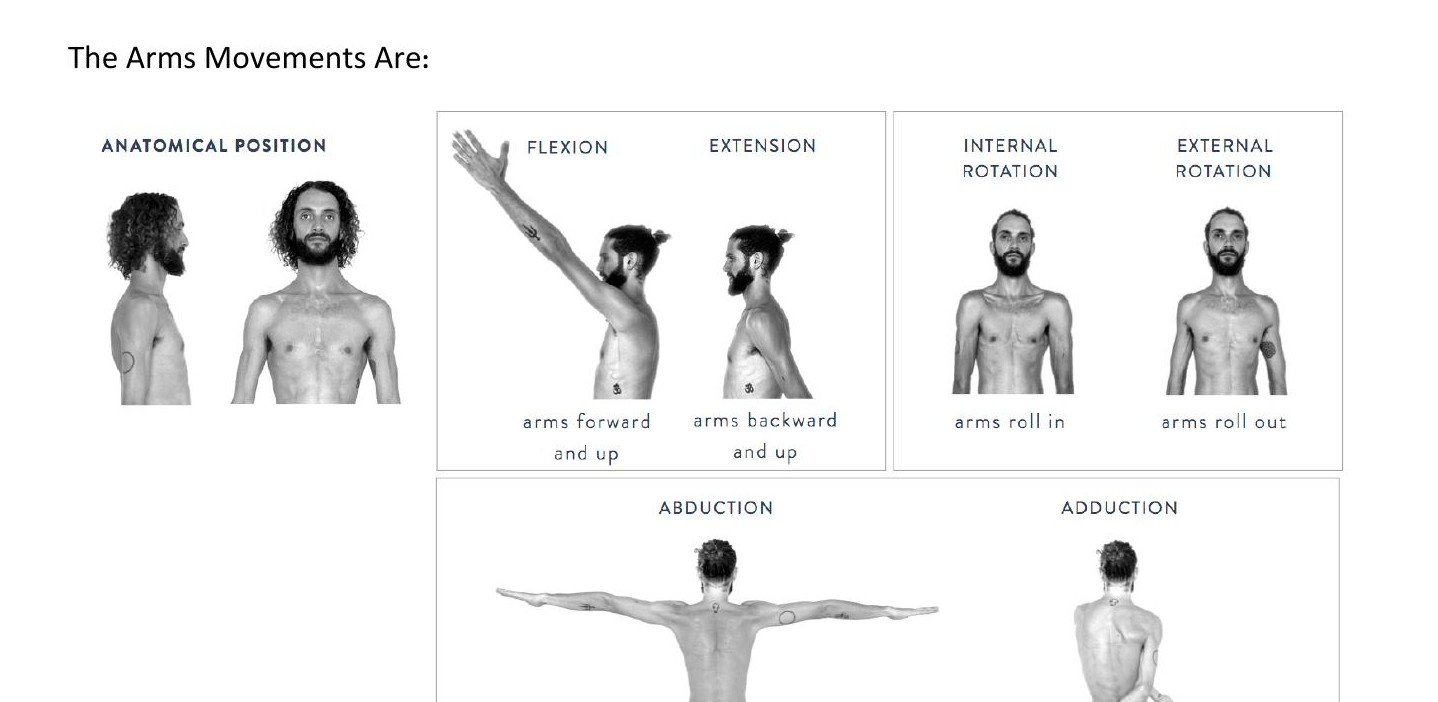
Why Yoga Shoulders Get Injured
There are two main reasons yoga practitioners injure their shoulders. If you’ve got shoulder pain, it’s almost certainly one of these, or both.
Reason 1: The arms move, but the shoulders don’t follow.
When your arms go up, your shoulders should go up with them. When your arms reach forward, your shoulders should reach forward too. If the shoulders stay still, or worse, get pulled in the opposite direction, the tissues and bones at the top of the shoulder start hitting each other. That compression is where the damage happens. Pain, inflammation, rotator cuff tears, all of it.
This is exactly what’s happening in a lot of yoga cues. “Draw your shoulders down and back” during Upward Dog or backbends is the classic one. The arms are going up, but the cue is pulling the shoulders down. The joint is being asked to do two opposite things at once, and the compression lands right in the rotator cuff.
The fix: shoulders move in the same direction as your arms. Arms forward, shoulders forward. Arms up, shoulders up.
Reason 2: Muscle imbalance, especially the serratus anterior.
The muscles that control the shoulder run from your neck down to your elbows, and wrap around to your low ribs and back. That’s a lot of muscles, and it’s very easy for some to be overworked while others are underused.
In yoga, the single most underused muscle is the serratus anterior. It wraps from the bottom of the shoulder blade, under the armpit, toward the front ribs. Its job is to stabilise the shoulder blade and bring the shoulder forward and down. Most yoga practitioners have never consciously engaged it.
When the serratus anterior is weak, other muscles take over, get overworked, and start complaining. That’s where the pain between the shoulder blades, in the upper traps, and along the neck comes from. Not because those muscles are “tight”. Because they’re doing a job they weren’t meant to do alone.
The fix: train the serratus anterior. Learn what it feels like when it fires. Use it in your poses.
How to Actually Protect Your Shoulders in Yoga
With the two reasons above in mind, here’s what to actually do.
Let your shoulders move with your arms. In any arms-overhead pose (Warrior One, Upward Reach, Handstand prep), let your shoulders rise with your arms. The “draw your shoulders down” cue is often wrong here. In any forward-reaching pose, let them reach forward. You want the shoulder girdle supporting the arms, not fighting against them.
Find your serratus anterior. Come into Tabletop on your hands and knees. Without bending your elbows, push the floor away so your upper back rounds slightly and the space between your shoulder blades widens. That’s serratus anterior firing. Don’t hold it. Once you’ve got it, come in and out — round and widen, then release, then round and widen again. Repeat ten times. That on-off pattern is how you actually learn to recruit the muscle, rather than grind through a static hold. Once you can feel it in Tabletop, it’s the same activation you want in Plank, Chaturanga, and any other weight-bearing pose.
Don’t push into joint pain. Discomfort in a muscle is normal. Discomfort in a joint is not. If you feel it in the shoulder itself — the glenohumeral joint, right at the top of the arm — stop. That’s your body telling you the joint is being loaded in a way it can’t handle. Back off, modify, or skip the pose.
Warm up the shoulders before loading them. Joint mobility work at the start of class — circling the arms, moving the shoulder girdle through its full range — does three things: improves circulation, activates the stabilising muscles, and tells you which side is stiff or sore today. Five minutes at the start of practice can prevent months of recovery later.
Be careful of strong rotational loads. Eagle Pose, strong binds, and deep twists that crank the shoulder into extreme internal rotation are where a lot of injuries happen. These poses aren’t bad. But if you’ve already got shoulder pain, they’re not helping.
A Note on Chaturanga
Chaturanga is where most yoga shoulder injuries either start or get worse. In a typical vinyasa class, you might do 20 or 30 of them in a single hour. That’s a lot of load on a joint that’s mostly held together by soft tissue.
The single most useful thing you can do for your shoulders: do a lot fewer Chaturangas. Drop to your knees for most of them. Skip half of them entirely and take Child’s Pose or Downward Dog instead. You’re not missing out on anything that matters, and you’re saving your shoulders years of wear.
If you do take a full Chaturanga, don’t let your shoulders drop below your elbows. When the shoulders sink, the joint gets compressed, and that’s where the damage happens.
When to See a Professional
If your shoulder pain:
- Is sharp rather than achy
- Has been going on for more than a few weeks
- Gets worse with any overhead reaching
- Is accompanied by weakness, clicking, or loss of range
…stop self-diagnosing and see a physiotherapist or a sports doctor. Yoga is not a substitute for proper medical assessment, and some rotator cuff injuries get significantly worse if you keep practising through them.
The Bigger Picture
Shoulder injuries in yoga are almost always a result of cueing and technique, not of the practice itself. Done with proper anatomy — arms and shoulders moving together, stabilising muscles active, no pushing into joint pain — yoga is genuinely good for your shoulders. Done with the old “draw the shoulders down and back” cue for every pose, it’s a recipe for years of rotator cuff problems.
Most yoga teacher trainings still teach this old cueing. The 200hr Yoga Teacher Training at Lanka Yoga is built on a physiology-first approach, where we go into exactly this kind of anatomical detail for every joint complex in the body. If you want to teach yoga in a way that keeps your students’ shoulders healthy long-term, or protect your own, that’s what we cover.
If you’re not ready for an in-person training, I cover the same physiology-first approach in my online course A New Yoga. It’s self-paced, works for beginners and experienced practitioners, and gives you the foundations of this way of moving so you can apply it to your own practice straight away.