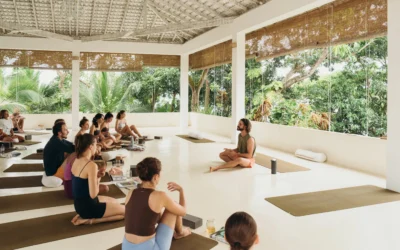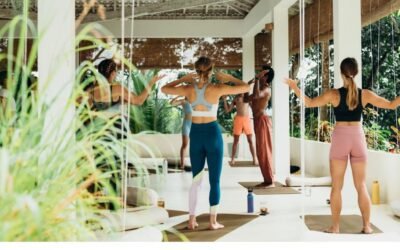
Short answer: no.
If anything, it’s the people who think they aren’t flexible enough who tend to get the most out of yoga. The worry itself is usually a sign that you’re paying attention, and that’s a good place to start.
This post sorts out where the worry comes from, what a teacher training actually asks of your body, and what’s worth focusing on if you’re still hesitating.
The short answer
You don’t need to be flexible to do a yoga teacher training. Yoga meets you where you are. The practice is built to work with the body you walk in with, not the one you think you should have.
Quick aside: if you’re already very flexible, you’ll find yoga spends a lot of time building stability around your joints, not adding more range. Healthy joints are strong and flexible, not just one or the other. Most yoga practitioners err on one side of that, and the practice is designed to even it out either way.
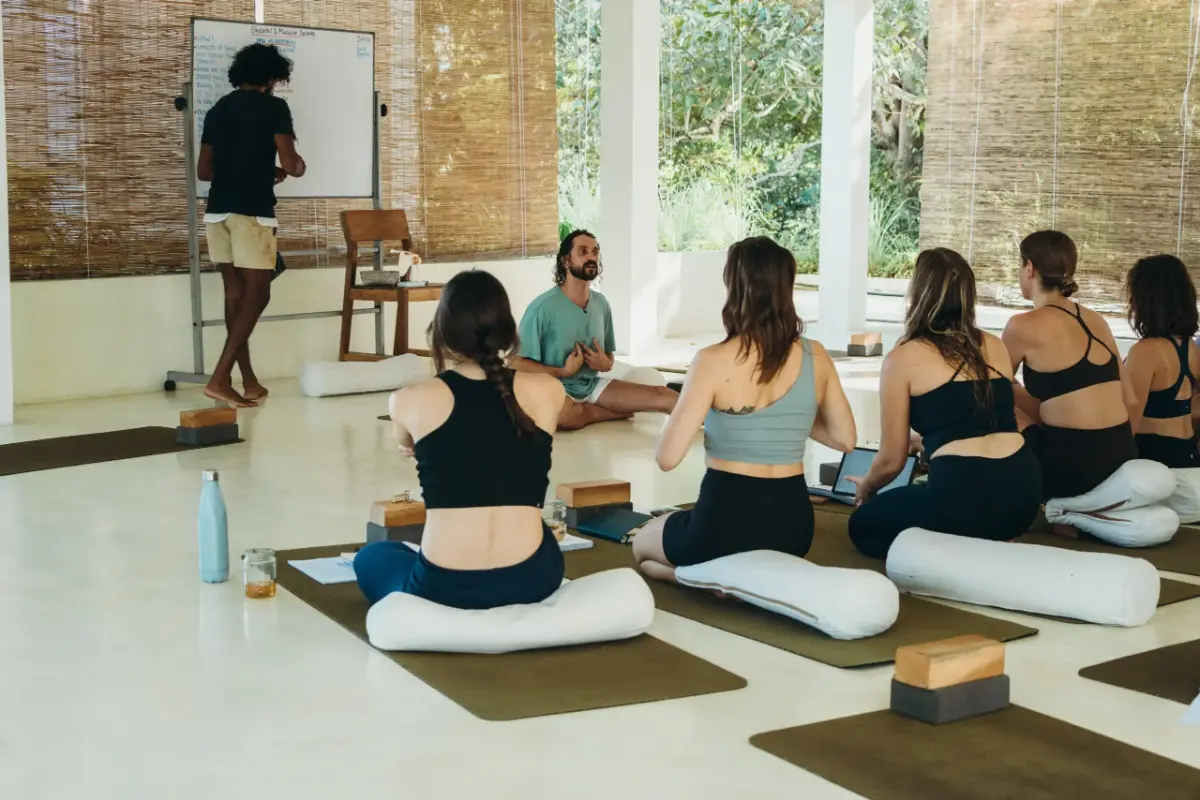
Where the “I’m not flexible enough” idea comes from
A lot of it is Instagram. Handstands on cliffs, splits on paddleboards, that sort of thing.
But a bigger part of it is older than that. The famous yogis. Iyengar, Pattabhi Jois, photos of seated sages folded in ways that look impossible. It’s worth saying clearly: those men started practising as children, in a culture that didn’t use chairs or western toilets. Their hips, knees and ankles spent decades in deep ranges before they ever stepped on a mat. Their flexibility is the product of a life, not a sign of what yoga requires.
If you grew up sitting on chairs, your body has different defaults. That’s fine. The practice accounts for it.
What a YTT actually asks of your body
Honestly, not much. The bar is:
- You can move.
- You’re keen to learn.
- You want to practise.
That’s it. If you’re super able, amazing. If you’re less so, also amazing. Both kinds of bodies fit on the training. Both kinds of bodies leave better teachers.
Yoga teaches you about your body. It teaches you how to get the best out of the body you actually have. And it challenges you in a few different ways: physical, mental, and sometimes through plain boredom, which you’ll meet again in meditation.
What’s actually useful coming in
Two things matter more than flexibility:
Real interest in yoga. Not a passing curiosity. The students who do best on training are the ones who actually want to be there. They’re the ones who keep practising on their own time, ask questions during lectures, and stay engaged when the days get long.
Knowing the basics. You should roughly know what the foundational postures are, how to breathe in and out, and what a sun salutation is. You don’t need to be polished. You just need to not be starting from zero.
A counterintuitive note: as a trainer, students with a bit less experience are often easier to teach than students with a lot. There’s less to unlearn. Bad habits haven’t set in yet. So if you’re worried your handful of years isn’t enough, it’s probably an advantage.
Healthy range, not extreme range
This is the part to get right.
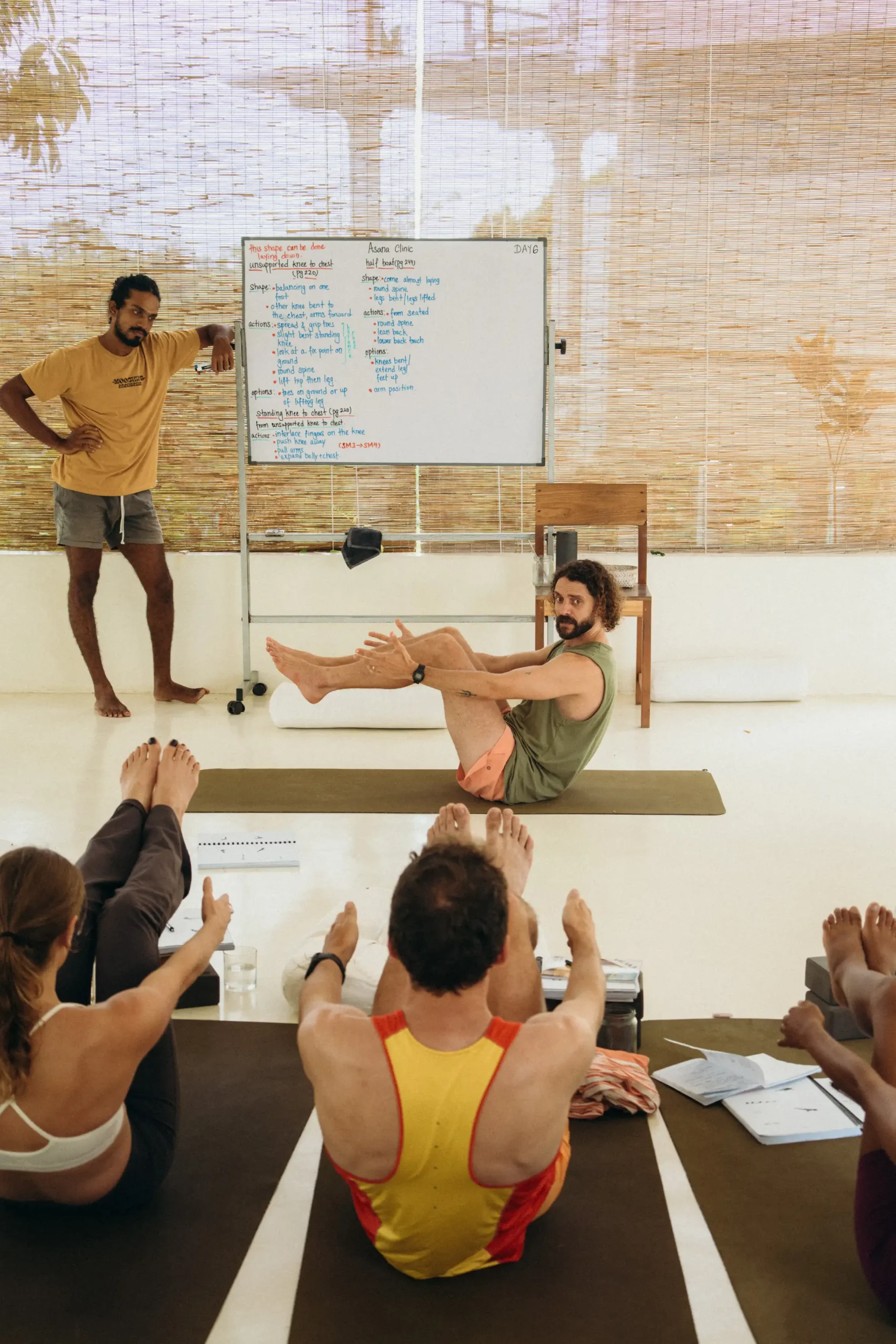
Flexibility matters. Being able to squat, fold forward, twist, and reach your arms overhead without compensating somewhere else, that’s worth working toward. If those movements are limited, the practice is going to spend time helping you reclaim them. That’s part of what a YTT is for.
What you’re not aiming for is extreme range. The yoga world has a long history of overstretching, especially in the hips, and it’s caused a lot of injuries. Hips that are very mobile and very weak end up worse off, not better. The same is true of shoulders, knees, and the spine.
The goal isn’t to become bendy. It’s to move well.
What our YTT expects, and doesn’t
We don’t screen for flexibility. We don’t ask you to film yourself doing a forward fold or send us a photo of your downward dog.
What we expect is genuine interest in yoga, a basic understanding of the practice, and a body that can handle the schedule. We’ve trained students who couldn’t reach their shins on day one and were teaching strong, intelligent classes by week four. We’ve also trained very flexible students who needed the four weeks to learn how to engage their muscles properly. Both types of students leave better teachers.
If you’re still worried, don’t be
If you’re asking the question, you’re already paying enough attention to be a good student. That’s most of the work.
Show up. The practice will do the rest.
A note on Lanka Yoga
If you’re considering a YTT and want to know whether one of our Yoga Teacher Training’s is a fit for you, the flexibility question isn’t a barrier. We’ve trained students at every level of mobility and watched them all leave as competent teachers.
The training is built on the Yoga Synergy method developed by physiotherapists, so it’s anatomically grounded and movement-science based. It works with the body you have, not the one you think you should have. We run small cohorts (capped at 20) at a purpose-built lakefront shala on Koggala Lake, Sri Lanka.
If you’d like to chat about whether the training is right for you, including any concerns about your current practice or flexibility, drop us a line. We’re happy to help, even if the answer is that another training is a better fit for you.
Stefan