
Not everything I’ve learned about teaching came from a yoga mat or a yoga book. Some of the most important shifts (like how I listen, reflect, or show up) came from books that had nothing to do with yoga at all. These are the ones I keep coming back to. They’ve shaped how I teach, think, and carry myself, as a teacher and a human. They live in the Lanka Yoga library and some have sat in my backpack on every long journey.
1. Essays in Love – Alain de Botton

Philosophy meets heartbreak.
I picked this up in my early teaching years, somewhere between figuring out how to hold a room and figuring out myself. A novel, technically, but really it’s de Botton thinking out loud about why we fall in love, misread each other, and tell ourselves neat stories about messy feelings. The part that stayed with me: the cycle isn’t personal. The highs, the projections, the quiet resentments, the way things end and start again, it’s not some unique flaw in me or the people I’d been with. We’re all running the same software. That realisation took the shame out of it. Suddenly the patterns weren’t evidence that I was broken, they were just human. Reading this book didn’t fix anything, but it shifted the frame. Less “why does this keep happening to me”, more “oh, this is the thing everyone’s going through, just differently dressed.”
2. Courage – Osho
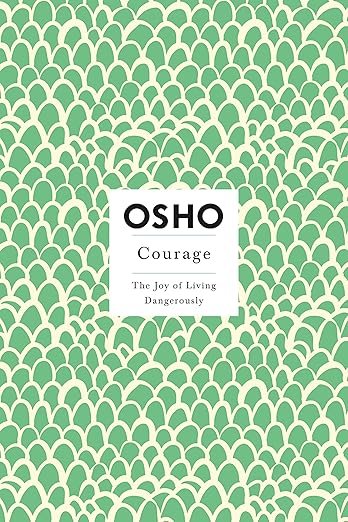
Fear-busting primer.
Osho’s central reframe is simple and sticky: fear isn’t a stop sign, it’s a signpost. Whatever scares you is usually pointing at the exact thing worth moving towards, because that’s where the growth is. Safety keeps you where you already are, which is comfortable but costs you. I read this in my early teaching years and it didn’t make the fear go away, but it changed my relationship with it. Instead of treating that tight feeling in the chest as a reason to back off, I started reading it as information. This matters. Pay attention. That shift quietly compounded. It’s the book that helped me become the kind of person who actually goes and does the slightly crazy thing, like moving countries, starting a yoga centre, building something from nothing on the edge of a lake in Sri Lanka. Fear didn’t stop being loud, I just stopped letting it drive.
3. The 4-Hour Work Week – Tim Ferriss
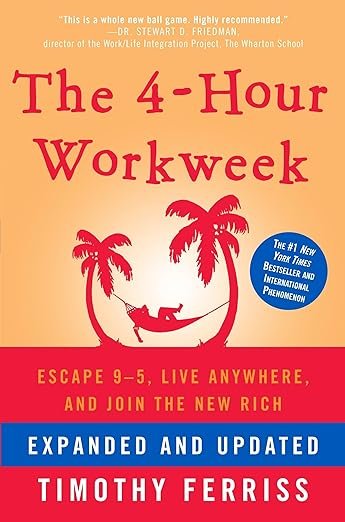
Design your work around your life, not the other way around.
The title undersells it. The 4-Hour Work Week isn’t really about working four hours, it’s about the premise that work should serve your life, not the other way round. If you’re not building your own thing, you’re building someone else’s. That idea planted itself in me years before I was ready to act on it. Being an entrepreneur wasn’t a lifestyle for other, bolder people. It was just a choice. Work for yourself, or work for someone who is. Ferriss didn’t hand me a plan, and I didn’t lift his template, but the mindset underneath every big call I’ve made since came from this book. When I was deciding whether to leave stable teaching work, build the centre, take on the risk of running my own training programmes, this was the voice in the back of my head saying: you can design this, you don’t have to inherit it.
4. Sapiens – Yuval Noah Harari
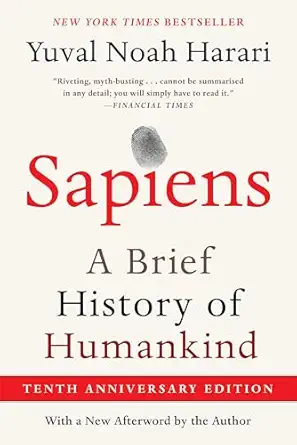
Zoom out 70,000 years.
Sapiens zooms so far out that your daily problems stop looking like problems and start looking like patterns. Harari’s big moves: most of what we take as reality is actually shared fiction (money, nations, rights, brands), most of our modern suffering is evolutionary mismatch (bodies built for movement stuck in office chairs), and progress in the material sense doesn’t track onto happiness in any clean way. I read this when I was already questioning a lot of the default scripts, what work is for, what success looks like, why everyone seems so busy and so unwell at the same time, and Sapiens gave language to things I’d been half-feeling. It made me think bigger too. About society, war and peace, love, what we actually mean by progress. His follow-ups Homo Deus and 21 Lessons for the 21st Century are worth reading too. You don’t walk away from any of them with neat answers, you walk away asking better questions.
5. Emotional Intelligence – Daniel Goleman
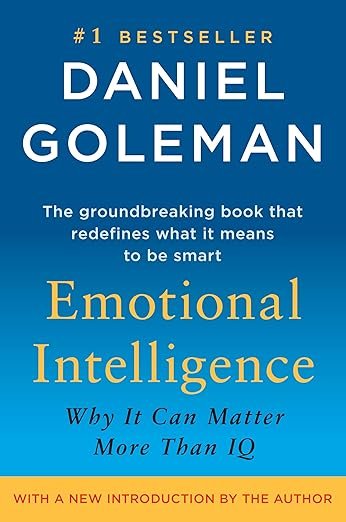
Decode stress and trauma.
Goleman’s book found me somewhere along the road of learning about the body, emotions, healing, all the bits I didn’t get in school. He makes the case that emotional intelligence, the ability to read yourself, read others, and respond rather than react, matters more than raw intellect for pretty much anything that involves other humans. Which is most of life. He breaks it into parts you can actually practice: self-awareness, self-regulation, empathy, social skill. What gripped me most was the physiology. How stress actually works in the body. What anger is doing chemically. Why fear hijacks your decision-making before your rational brain even gets a vote. Once you see it that way, you stop treating your reactions as personality and start treating them as a system you can work with. It shifted how I handle my own reactions, how I read other people, gave me language for things I’d been feeling but couldn’t name, and made me more patient. The quiet measure of whether a book actually changed you.
6. The Power of Now – Eckhart Tolle
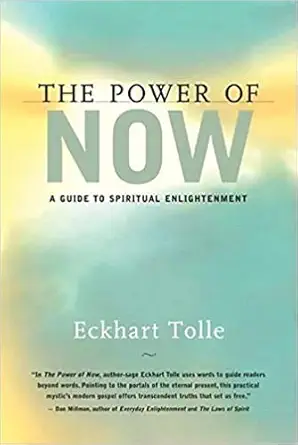
Presence, minus the incense.
I read this right at the start of my yoga journey, when I was still figuring out what any of this was actually for. Tolle’s idea is almost absurdly simple: everything we enjoy, sex, sport, games, work, exercise, the lot, is just a delivery system for one thing. Presence. The feeling of being here, fully, without the mental tape running in the background. Everything else is scaffolding. If you can learn to get there without the scaffolding, you’ve shortcut the whole bloody thing. That reframe changed how I thought about practice, about pleasure, about why some days feel real and others feel like they happened to someone else. What I like about Tolle is he’s not asking you to fix yourself. He’s pointing out that you’re already fine, you’re just not here for it. That permission, to stop mentally optimising and actually be in a moment, is what I took from it and still carry.
7. Nonviolent Communication – Marshall Rosenberg
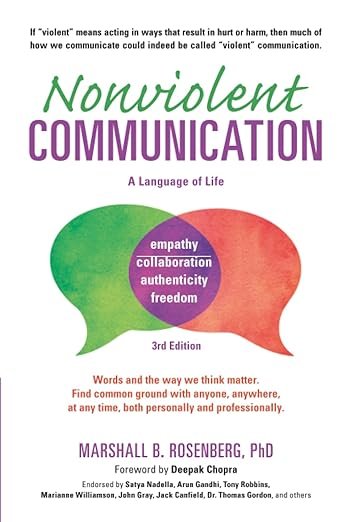
Speak so people listen (and vice-versa).
Most of us think we’re decent communicators until we read a book like this and realise we’ve been running on autopilot. Rosenberg’s whole thesis is that the way we’ve been taught to speak to each other, blame, labels, demands, shutdowns, is actually doing the opposite of what we want. The words matter, but so does everything sitting behind them. Tone, timing, what’s not being said, what someone actually means underneath what they’re telling you. He gives you a framework to both speak and listen more clearly: observation over judgement, feelings over blame, naming what you actually need instead of dressing it up as a complaint. None of it is mystical, all of it is practiceable. What shifted for me is how I hear people now. Less reacting to the surface, more listening for what’s underneath. Less of “what did they just say” and more of “what do they actually mean.” It changes everything, how you argue, how you apologise, how you ask for what you need.
You don’t need to be reading Yoga Sutras 24/7 to teach from depth. These titles sharpen your perspective, stretch your worldview, and make you more grounded in any room, yoga or otherwise.
Like this kind of content? Follow me on Instagram for daily movement, mindset, and teaching insights. Or come train with me in person at one of our Yoga Teacher Trainings or through my Online Course at Lanka Yoga.