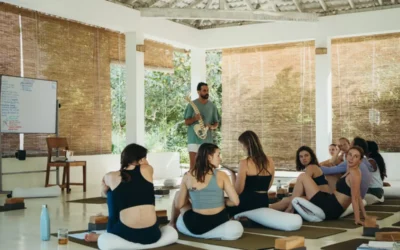
When I first started teaching, I thought I had to read everything. My bookshelf filled fast, but most of it sat unopened. Over time, I came back to a small group of books that actually helped me teach better, think sharper, and stay curious about the practice. These six have survived moves, injuries, studio switches, and made it into the Lanka Yoga library. Borrow them when you visit, or start now.
1. The Science of Yoga – William J. Broad
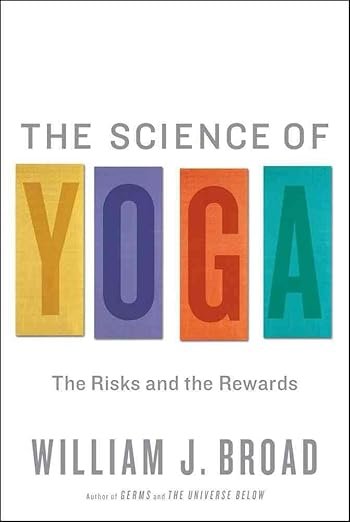
Bust myths before you teach them.
I picked this up in 2013 during my first yoga training, still learning and wanting solid foundations under me. What I didn’t expect was to have my eyes opened to how dangerous yoga can actually be. The section on yoga injuries genuinely worried me, not as a student, but as a new teacher suddenly responsible for other people’s bodies. It made me take cueing, sequencing, and contraindications seriously in a way my training hadn’t quite reached.
Written by an investigative journalist, this book breaks down what yoga really does (and doesn’t), backed by lab results and medical evidence. Expect a few myths to fall away, while sharpening your ability to separate tradition from facts. For teachers, especially new ones, this one’s non-negotiable.
2. Light on Yoga – B.K.S. Iyengar
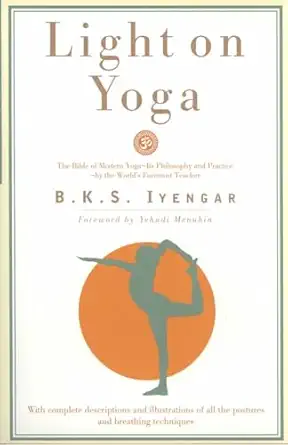
Know your lineage.
I came to this one during my first training too, and I’ll be honest. I tried to read it cover to cover, and it went right over my head. Over time it’s become a book I go to for reference and inspiration rather than front-to-back reading. Flipping through it still feels like meeting a master.
The posture photos are iconic, but these days I use them more as a reference for where a pose can end up, not how most people actually practice. Real-world Iyengar teaching involves a thousand variations and progressions that this book doesn’t show. Some of the alignment has aged, and some of the benefits listed are educated guesses from Iyengar’s own experience rather than research. That said, for advanced practitioners the cues and instructions still mostly hold up.
For teachers, it’s a reference worth owning: for history, for language, for the sheer weight of what Iyengar mapped before anyone else did. For new students, it’ll probably confuse or scare them. Start somewhere else first.
3. Yoga Anatomy – Leslie Kaminoff
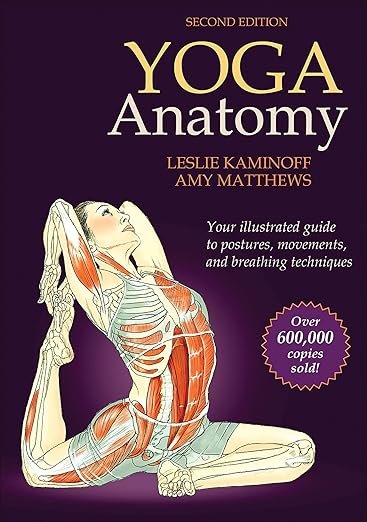
Anatomy made accessible.
Recommended reading during my first YTT at the Australian Yoga Academy, and I’ve hung onto it ever since. The first few chapters on breathing and movement are 100% relevant to yoga practice and teaching. Easy to understand, with amazing visualisations and images. Kaminoff makes anatomy visual, practical, and jargon-free.
It didn’t change the way I teach. This book isn’t trying to be a teaching method, but it helped me understand what’s actually happening in the body during yoga. I don’t open it often these days, but the fact that it helped me visualise what’s happening under the skin in major poses made it worth every page.
If I could change one thing: the pose breakdowns lean on lists of “activating muscles,” and anatomy isn’t that tidy in real bodies. I’d love something more interesting there: individual variation, compensation patterns, anything beyond the standard list. But that’s a minor note. For teachers, this book is a must.
4. Applied Anatomy & Physiology of Yoga – Simon Borg-Olivier & Bianca Machliss
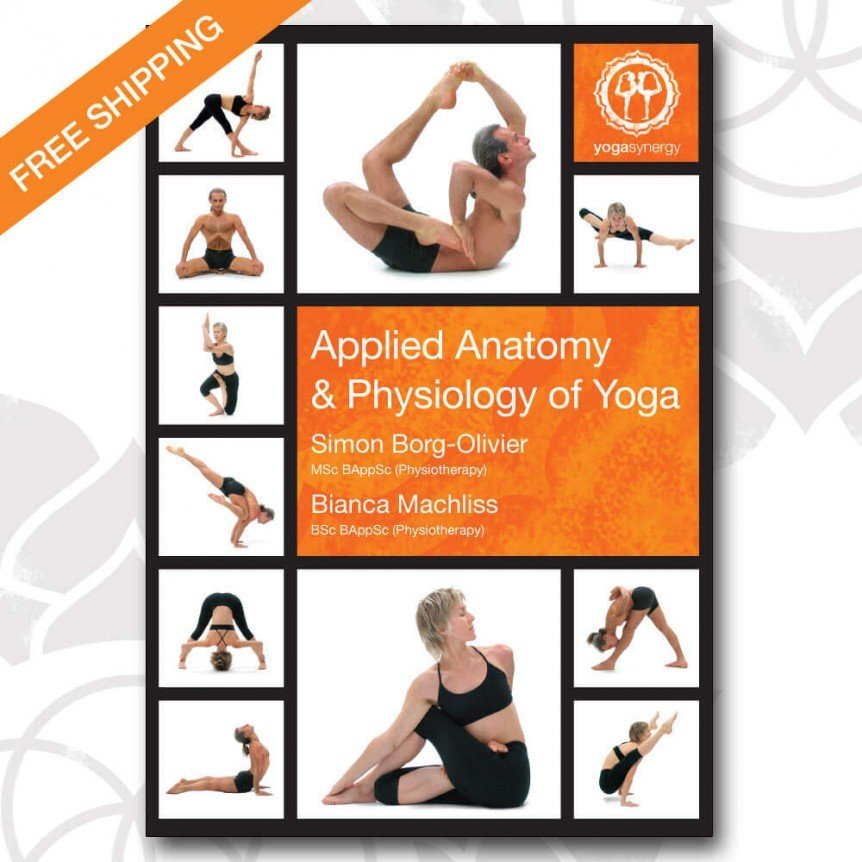
The deep-dive manual.
I first met this book through Simon Borg-Olivier’s online Anatomy and Physiology of Yoga training. It’s not an instruction manual for how to teach. It’s an incredibly in-depth dive into what actually happens in the body when we do yoga and move. Studying this course alongside the book took my understanding of anatomy and physiology to a level I’d never reached before. I re-read it as often as I can, still trying to understand more.
Be warned about the density: it’s scientific, medical, academic, full of jargon. I didn’t understand much of it on my first read. I had to learn things just to understand other things. You can absolutely read it cover to cover, but good luck remembering anything unless you’re a doctor.
This isn’t for new teachers. It’s for yoga nerds, body nerds, and advanced teachers who want to keep digging. If that’s you, it’s the clearest explanation I’ve found of how traditional practice and Western science overlap, and the backbone of the Yoga Synergy method I teach. Keep it on the shelf for lifelong reference.
5. The Neuroscience of Mindfulness – Stan Rodski
Mindfulness is measurable.
My mum bought me this one, and I’m glad she did. Rodski is a neuroscientist, not a yogi, which gives the book its whole value: this isn’t assumption-based mindfulness writing, it’s research-backed. The science actually backs up what yoga and meditation teachers have been saying for thousands of years, which, read that way, is genuinely amazing.
The biggest shift it gave me: mindfulness and meditation don’t need to look like sitting cross-legged on a cushion. There are huge benefits in practising mindfulness all through the day: waiting in line, drinking coffee, walking somewhere. That idea alone has reshaped how I talk about meditation with students who feel like they can’t “sit still long enough to meditate properly.”
Rodski translates neuroscience into teachable, everyday techniques. For anyone interested in mindfulness (teachers, practitioners, or people just looking for tools to manage stress), this one delivers. Helpful evidence for sceptical students who want proof that “watching your breath” is genuine brain-training.
6. The Yoga Sutras of Patañjali
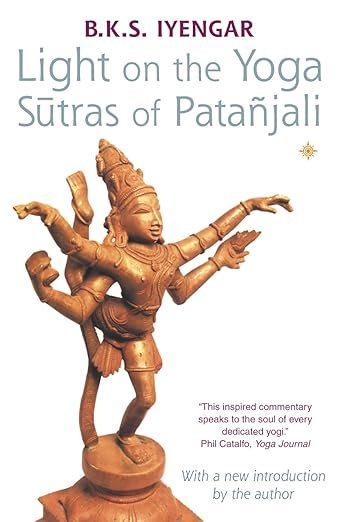
Philosophy in 196 bite-sized aphorisms.
Required reading on my first YTT, and it’s stayed on my shelf ever since. Iyengar’s commentary is why I keep going back to this edition specifically. He’s a voice we know and understand, and his translation bridges the traditional Sanskrit with a modern teaching perspective in a way other commentaries don’t quite manage.
The sutras I return to most are the opening ones: 1.1 and 1.2, where Patañjali defines what yoga actually is, and 2.46, the one every asana teacher should tattoo onto the inside of their eyelids (“sthira sukham asanam”: posture should be steady and comfortable). That single verse reframes how I teach asana more than almost anything else.
A word of warning: this isn’t a book you read cover to cover. If you try, you’ll get nothing from it. The Sutras are a text you explore: pick a verse, sit with Iyengar’s commentary, come back to it next month. For meditation-first perspectives, I also love Maharishi Mahesh Yogi’s translations (more playful, less serious, complementary rather than competing).
Not a book for casual readers. For teachers and serious practitioners, it’s essential.
These books show up often in our teacher training discussions. They’ve shaped how I think, sequence, and cue yoga to this day. If you’re serious about teaching well, these books are your base.
Follow me on Instagram for asana and practice breakdowns. Ready to go deeper? Look into my yoga teacher training in Sri Lanka or find one that suits you on the Lanka Yoga website.